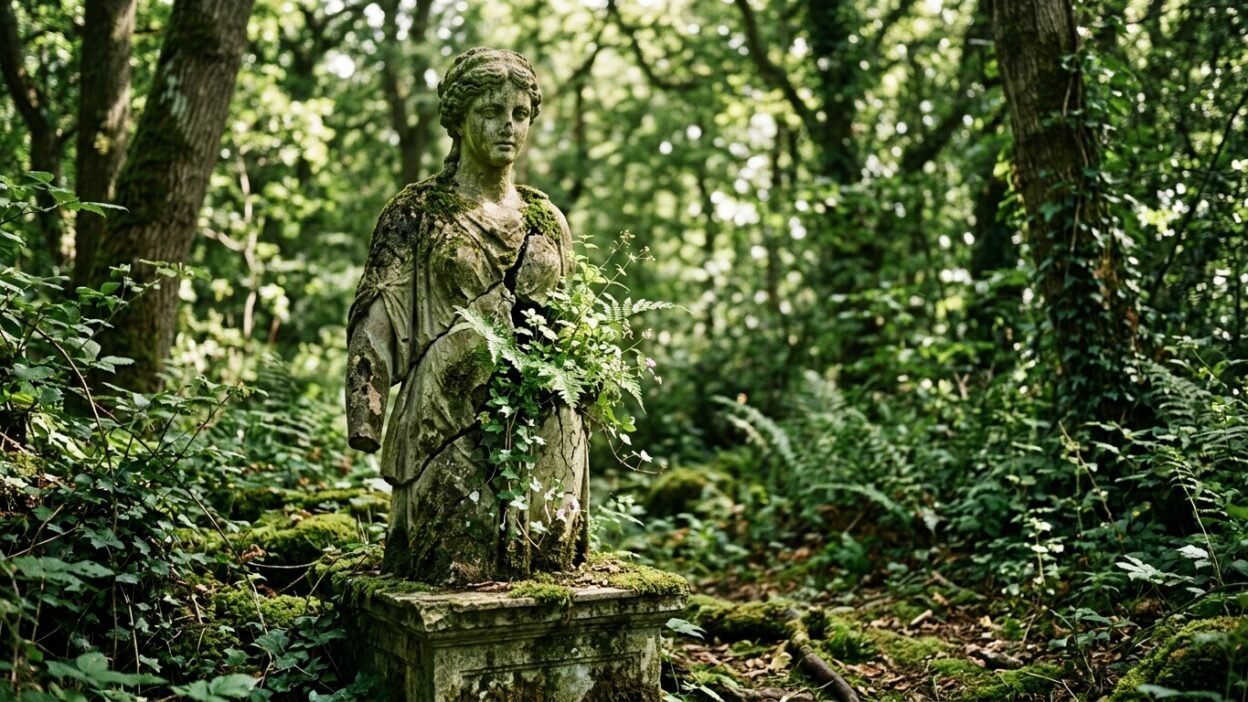
Decay symbolism is more than just the idea of deterioration—it represents transformation, endings and the natural cycle of life. From fading flowers to crumbling structures, decay symbolism often carries deeper messages about renewal, impermanence and hidden growth. Understanding this concept can help you see change not as loss but as a powerful step toward something new.
Decay Symbolism Meaning (Clear Definition)
Decay symbolism refers to the representation of decline, decomposition or deterioration as a natural and meaningful process. Rather than being purely negative, it often symbolizes:
- The end of a cycle
- Transformation and rebirth
- The passage of time
- Letting go of the old
In simple terms, decay is not just about destruction—it’s about making space for renewal.
What Does Decay Symbolism Represent?
At its core, decay symbolism reflects life’s inevitable changes. It highlights how everything—physical, emotional or spiritual—evolves over time.
Key symbolic meanings include:
- Transformation: Old forms break down to allow new growth
- Impermanence: Nothing lasts forever
- Renewal: Decay creates fertile ground for rebirth
- Loss and release: Letting go of what no longer serves you
- Time and aging: A reminder of life’s progression
These meanings connect closely with ideas like entropy, life cycles, aging symbolism, death and rebirth and natural transformation.
Summary of Decay Symbolism Meanings
| Symbol Aspect | Meaning |
| Physical decay | Aging, time, impermanence |
| Emotional decay | Letting go, healing, release |
| Spiritual decay | Transformation, rebirth |
| Cultural decay | Rise and fall of societies |
| Natural decay | Renewal and life cycles |
Spiritual Meaning of Decay Symbolism
Spiritually, decay symbolism is deeply tied to growth through endings. It suggests that what appears to be falling apart may actually be part of a higher process.
In many spiritual perspectives:
- Decay represents ego dissolution
- It encourages inner transformation
- It symbolizes spiritual rebirth after hardship
For example, just as a seed must decay in the soil to grow, personal struggles often lead to deeper awareness and strength.
Biblical / Religious Meaning of Decay Symbolism
In religious contexts, decay symbolism often reflects humility, mortality and the temporary nature of earthly life.
Common interpretations:
- Human mortality: “Dust to dust” emphasizes life’s temporary nature
- Spiritual renewal: Physical decay contrasts with eternal spiritual life
- Repentance and humility: Letting go of pride and material attachments
Rather than focusing only on decline, these teachings use decay as a reminder to seek deeper meaning beyond the physical world.
Decay Symbolism in History and Culture
Throughout history, decay symbolism has been used to express the rise and fall of civilizations and the passage of time.
Cultural perspectives:
- Ancient cultures: Ruins symbolized both loss and legacy
- Eastern philosophies: Decay aligns with balance and natural cycles
- Western traditions: Often linked with mortality and reflection
In many societies, decay is not feared but accepted as an essential part of existence.
Decay Symbolism in Literature and Art
Artists and writers have long used decay symbolism to convey powerful emotional and philosophical messages.
Common uses include:
- Crumbling buildings: Represent forgotten histories or lost glory
- Withering flowers: Symbolize fading beauty or love
- Dark landscapes: Reflect emotional decline or inner conflict
In literature, decay often mirrors a character’s psychological state or the collapse of moral values, making it a deeply expressive tool.
Dream Meaning of Decay Symbolism
When decay symbolism appears in dreams, it usually carries personal and emotional significance.
Common interpretations:
- Rotting objects: Letting go of toxic situations
- Decaying environments: Emotional exhaustion or change
- Breaking structures: Loss of stability or identity
These dreams are rarely negative warnings—they often signal that transformation is already underway.
Modern Meaning of Decay Symbolism
Today, decay symbolism is increasingly viewed in a more balanced and even positive light.
In modern contexts:
- It reflects personal growth after setbacks
- It highlights environmental awareness and natural cycles
- It symbolizes minimalism and letting go
In a fast-changing world, decay reminds us that endings are not failures—they are transitions.
FAQs
What does decay symbolize spiritually?
It represents transformation, rebirth and the release of old patterns to make way for spiritual growth.
Is decay symbolism always negative?
No, it often carries positive meanings like renewal, change and new beginnings.
What does decay mean in dreams?
It usually reflects emotional release, personal transformation or the need to let go of something in your life.
Why is decay important in symbolism?
It highlights the natural cycle of life, showing that endings are necessary for growth and renewal.
How is decay used in art and literature?
It symbolizes themes like mortality, lost beauty, emotional decline and transformation.
Conclusion
Decay symbolism teaches a powerful truth: nothing is permanent and that’s not a flaw—it’s a gift. Through decay, life continuously renews itself. What fades away today may become the foundation for something stronger tomorrow. When you understand this, change becomes less frightening and more meaningful.