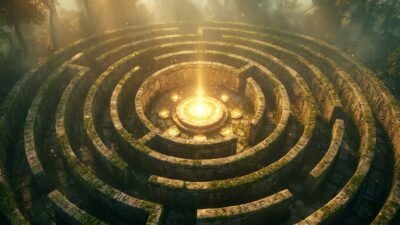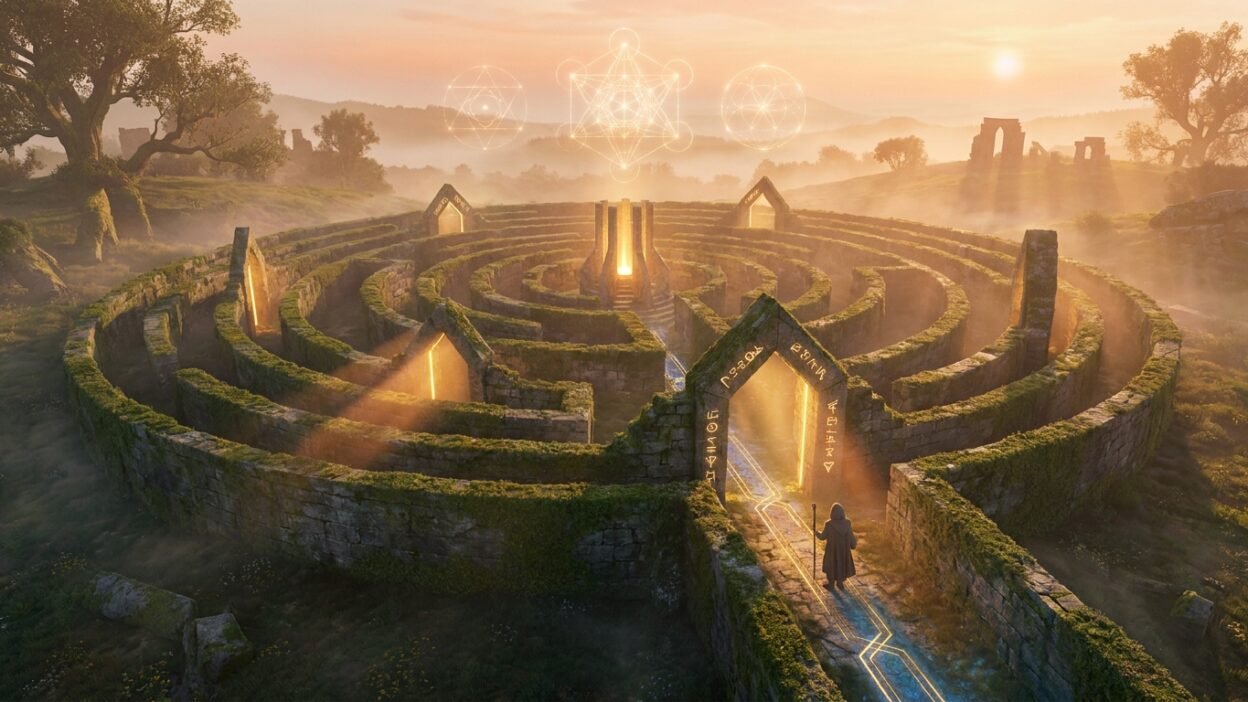
Labyrinth symbolism has fascinated people for centuries because it represents life’s journey, self-discovery, spiritual growth, and the search for deeper meaning. Across mythology, religion, art, and cultural traditions, labyrinth symbolism is often associated with personal transformation, inner wisdom, resilience, and the path toward enlightenment. Unlike a maze designed to confuse, a labyrinth follows a single winding route that leads to a meaningful center, making it a powerful symbol of life’s challenges and ultimate purpose.
For thousands of years, labyrinths have inspired people as symbols of personal journeys and inner exploration. Their winding paths remind us that life’s greatest lessons often come through patience, reflection, and perseverance rather than straight and easy routes. As a sacred journey symbol, the labyrinth encourages individuals to trust their path, embrace personal evolution, and seek deeper understanding.
Throughout history, labyrinths have appeared in sacred spaces, ancient legends, dreams, and artistic works as reminders that every journey, no matter how complex, can lead to growth, understanding, and renewal.
Quick Meaning of Labyrinth Symbolism
| Symbolic Theme | Interpretation |
| Journey | Life path and personal growth |
| Self-Discovery | Understanding oneself |
| Transformation | Inner change and evolution |
| Wisdom | Gaining knowledge through experience |
| Perseverance | Moving forward despite challenges |
| Enlightenment | Reaching deeper awareness |
Labyrinth Symbolism Meaning (Clear Definition)
Labyrinth symbolism refers to the symbolic meaning attached to a winding path that leads toward a central destination. Rather than representing confusion, it symbolizes a purposeful journey of growth, reflection, and self-discovery.
In symbolic traditions, labyrinths are associated with:
- Personal transformation
- Spiritual awakening
- Inner wisdom
- Patience and perseverance
- Self-reflection
- Life’s journey
- Enlightenment and renewal
Many scholars interpret labyrinth imagery as a metaphor for navigating life’s challenges while moving toward greater understanding and fulfillment.
Symbolic Meaning Table
| Symbolic Element | Meaning |
| Winding Path | Life’s journey |
| Center | Purpose and truth |
| Circular Design | Unity and wholeness |
| Entrance | New beginnings |
| Exit | Achievement and wisdom |
| Spiral Movement | Growth and transformation |
Related symbolic themes include spiritual journey, sacred path, personal evolution, inner transformation, self-discovery symbolism, ancient wisdom, mindful reflection, and enlightenment symbolism.
What Does Labyrinth Symbolism Represent?
Labyrinth symbolism represents life’s journey, self-discovery, spiritual growth, perseverance, and the search for inner wisdom. It reflects the idea that life’s path may contain twists and turns, yet every experience contributes to growth and understanding.
Common interpretations include:
- Personal growth
- Finding purpose
- Emotional healing
- Spiritual exploration
- Perseverance through challenges
- Discovery of inner truth
Across cultures, labyrinth imagery symbolizes trusting the process of life even when the destination is not immediately visible.
Like a winding road leading to a beautiful destination, personal growth often requires patience, courage, and faith in the journey.
Spiritual Meaning of Labyrinth Symbolism
Spiritually, labyrinth symbolism is closely connected with meditation, reflection, and inner transformation. Many spiritual traditions view walking a labyrinth as a symbolic pilgrimage toward deeper awareness and spiritual awakening.
Spiritual Awakening
A labyrinth often symbolizes awakening to higher truths and gaining a deeper understanding of oneself.
Inner Reflection
The winding path encourages contemplation, mindfulness, and personal insight.
Transformation and Healing
Many people see labyrinths as symbols of emotional healing and spiritual renewal.
Connection with the Sacred
The center of the labyrinth often represents divine wisdom, inner peace, or spiritual fulfillment.
The spiritual interpretation emphasizes that growth often occurs through patience, reflection, and trust in the journey.
Biblical / Religious Meaning of Labyrinth Symbolism
Although labyrinth symbolism is not directly discussed in the Bible, many religious traditions use journey-related imagery that reflects similar themes of faith, perseverance, and spiritual growth.
Within religious contexts, labyrinth symbolism may represent:
- The journey of faith
- Spiritual reflection
- Seeking divine guidance
- Personal transformation
- Moving closer to God
In medieval Christianity, labyrinths were sometimes placed in cathedrals as symbolic pilgrimage paths, allowing worshippers to experience a spiritual journey through prayer and contemplation.
Across various religions, sacred paths and symbolic journeys often represent the search for wisdom, truth, and enlightenment.
Labyrinth Symbolism in History and Culture
Labyrinth symbolism has appeared throughout human history in myths, sacred architecture, and cultural traditions.
Ancient Greece
The most famous labyrinth comes from Greek mythology, where King Minos commissioned a complex labyrinth to contain the Minotaur. Symbolically, it represented challenges, courage, and the quest for victory over fear.
Medieval Europe
Many churches and cathedrals incorporated labyrinth designs into floors as symbolic pilgrimage routes and tools for meditation.
Native American Traditions
Some Native American cultures used labyrinth-like designs, such as the “Man in the Maze” symbol, to represent life’s journey, personal choices, and the wisdom gained through experience.
Celtic Traditions
Celtic designs often featured winding patterns representing eternity, interconnectedness, and spiritual growth.
Ancient Sacred Sites
Labyrinth motifs appeared in numerous ancient cultures as symbols of protection, transformation, and the journey toward wisdom.
Across civilizations, labyrinth imagery reflected humanity’s search for meaning and understanding.
Labyrinth Symbolism in Literature and Art
Labyrinth symbolism has inspired writers, artists, and philosophers for centuries. It often appears as a metaphor for personal growth, mystery, and the search for truth.
In literature, labyrinth imagery commonly symbolizes:
- Self-discovery
- Emotional challenges
- Transformation
- Hidden knowledge
- The hero’s journey
Many novels, myths, and fantasy stories use labyrinths to represent obstacles that lead characters toward wisdom and personal development.
In many heroic stories and myths, labyrinths symbolize the challenges that individuals must overcome before achieving wisdom, maturity, or personal transformation. The journey through the labyrinth often mirrors the journey within oneself.
In visual art, labyrinths often appear as intricate pathways, spirals, and sacred geometric patterns that symbolize growth, unity, and enlightenment.
Dream Meaning of Labyrinth Symbolism
Dreaming about labyrinth symbolism often reflects life’s challenges, decision-making, and the search for clarity.
Walking Through a Labyrinth
This may symbolize personal growth and navigating an important life transition.
Reaching the Center
Finding the center often represents achieving understanding, success, or inner peace.
Being Lost in a Labyrinth
This may indicate uncertainty, confusion, or the need for reflection before making a decision.
Exiting a Labyrinth
Successfully leaving a labyrinth often symbolizes overcoming obstacles and gaining wisdom.
Discovering a Hidden Path
A hidden path may represent unexpected opportunities, solutions, or insights.
Running Through a Labyrinth
Running through a labyrinth may symbolize urgency, anxiety, or a desire to quickly solve a problem. It can suggest the need to slow down and trust the process.
These dreams frequently encourage patience, self-trust, and openness to growth.
Modern Meaning of Labyrinth Symbolism
In modern culture, labyrinth symbolism often represents mindfulness, personal development, resilience, and self-discovery.
Today, labyrinth imagery appears in:
- Meditation practices
- Personal growth teachings
- Spiritual retreats
- Art and design
- Literature and films
- Wellness programs
Labyrinth Symbolism in Personal Development
Many modern self-development approaches use labyrinth symbolism as a reminder that meaningful progress is often non-linear. Success, healing, and growth usually involve learning from challenges rather than avoiding them.
Labyrinth Symbolism in Mental Wellness
Today, labyrinths are often used in wellness centers and therapeutic settings as tools for mindfulness, stress relief, emotional healing, and self-reflection.
Labyrinth Symbolism in Mindfulness
Labyrinths are frequently used as tools for meditation and stress reduction, helping individuals slow down, reflect, and reconnect with their inner selves.
The modern interpretation focuses on resilience, purpose, and the value of embracing life’s journey.
Signs and Symbols Related to Labyrinth Symbolism
Several symbols share similar meanings with labyrinth symbolism:
- Spiral — growth and evolution
- Pathway — life’s journey
- Compass — guidance and direction
- Key — discovering truth and wisdom
- Circle — unity and wholeness
- Phoenix — rebirth and transformation
- Lotus — spiritual awakening
- Mountain — overcoming challenges
- Tree of Life — connection and growth
- Star — hope and guidance
- Candle — guidance through uncertainty
- Bridge — transition and personal growth
Together, these symbols represent discovery, perseverance, wisdom, and personal transformation.
FAQs
What Is the Meaning of Labyrinth Symbolism?
Labyrinth symbolism represents life’s journey, self-discovery, transformation, wisdom, and the pursuit of deeper understanding.
What Does Labyrinth Symbolism Represent Spiritually?
Spiritually, it symbolizes inner reflection, personal growth, healing, and the journey toward enlightenment.
Is Labyrinth Symbolism Positive?
Yes. Most symbolic interpretations view it as a positive symbol of growth, perseverance, wisdom, and self-awareness.
What Does Dreaming About a Labyrinth Mean?
Dreams involving labyrinths often symbolize important life choices, personal challenges, and the search for clarity or direction.
Why Are Labyrinths Important in Symbolism?
Labyrinths symbolize the belief that every challenge and experience contributes to personal growth, wisdom, and fulfillment.
Conclusion
Labyrinth symbolism reminds us that life’s path is rarely straight, yet every twist and turn contributes to growth and understanding. Whether viewed through spirituality, dreams, mythology, or personal development, it represents perseverance, wisdom, and the courage to continue moving forward. Its timeless message encourages us to trust the journey, embrace personal evolution, and appreciate the lessons discovered along the way.